Modernism in migration

CfP: Modernism in migration

Call for papers

Modernism in Migration: Relocating Artists, Objects and Institutions, 1900–1960

Theme outline

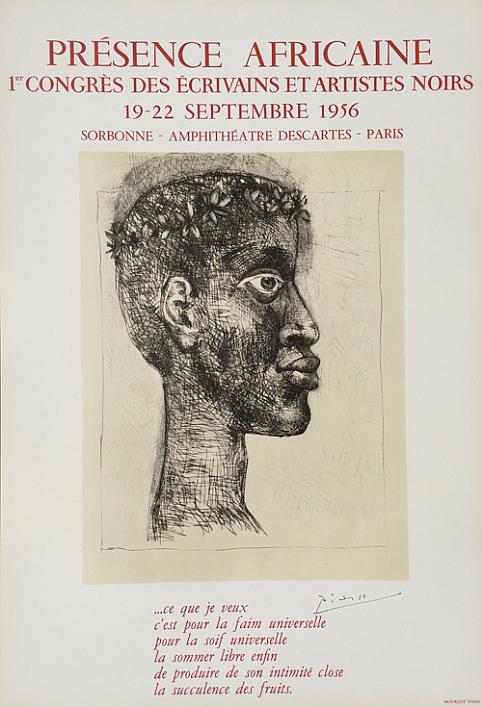
In the production and reception of art, processes of migration play a crucial role. This is particularly true for modernism and the historical avant-gardes of the twentieth century, when artists’ transnational networks and migrations across countries and continents greatly impacted artistic developments. Besides artists and agents such as art dealers and art historians, works of art and art institutions also migrated. For an upcoming issue of Stedelijk Studies, we invite scholars to explore forms of migration and their influence on the development and dissemination of modern art around the world from 1900–1960.

Artists migrated to metropolises such as Paris in the twentieth century for inspiration and education, leading to collaborations with colleagues, gallerists, and other art promoters. Artists’ experiences under new and alien circumstances were often reflected in their work. Migrations were not always by choice: artists and art agents were forced into involuntary emigration or exile by colonialist and political developments, such as those prompted by National Socialism. Whatever the impetus, between 1900 and 1960 artists and collectors migrated globally on an unprecedented scale and, along with these migrants, their works of art moved as well.

This issue of Stedelijk Studies complements an upcoming exhibition about Migrants in Paris at the Stedelijk Museum Amsterdam (September 2019–January 2020), but will offer an in-depth exploration of migration from a greater variety of angles. We understand migration, just as modernism in the arts, as a global phenomenon. We are looking for theoretical explorations as well as art historiographical approaches and case studies, and especially welcome articles that explore gender, queer, and postcolonial perspectives, among others.

Potential topics include:

  • The migrant artist in the metropolis (e.g., centers such as Paris, Berlin, New York, Buenos Aires, São Paolo, Shanghai, Jakarta, etc.)
  • Migration away from such centers in search of the peripheral
  • International and transnational artists’ networks, associations, and collaborations
  • International and transnational art trade and collection building
  • (Inner) emigration vs. exile of artists and art agents
  • (Trade) routes and dislocation of art objects and collections (voluntary or forced)
  • Dislocation/relocation of institutions (e.g., Bauhaus, Warburg)
  • The impact of emigration on the artist’s work and on art history as a discipline
  • Cultural transfer and translation

The thematic issue Modernism in Migration: Relocating Artists, Objects, and Institutions, 1900–1960 will be edited by Dr. Tessel M. Bauduin and Dr. Gregor Langfeld (both of the University of Amsterdam).

Stedelijk Studies

Stedelijk Studies is a high-quality, peer-reviewed academic journal published by the Stedelijk Museum Amsterdam. The journal comprises research related to the Stedelijk collection, exploring institutional history, museum studies (e.g., education and conservation practice), and current topics in the field of visual arts and design.

Submission

Deadline for the abstract is February 20, 2019. Deadline for the article (4,000–5,000 words) is May 20, 2019. Publication of the issue will be in November, 2019. Manuscripts and other editorial correspondence should be sent to: Esmee Schoutens, Managing Editor Stedelijk Studies, stedelijkstudies@stedelijk.nl.
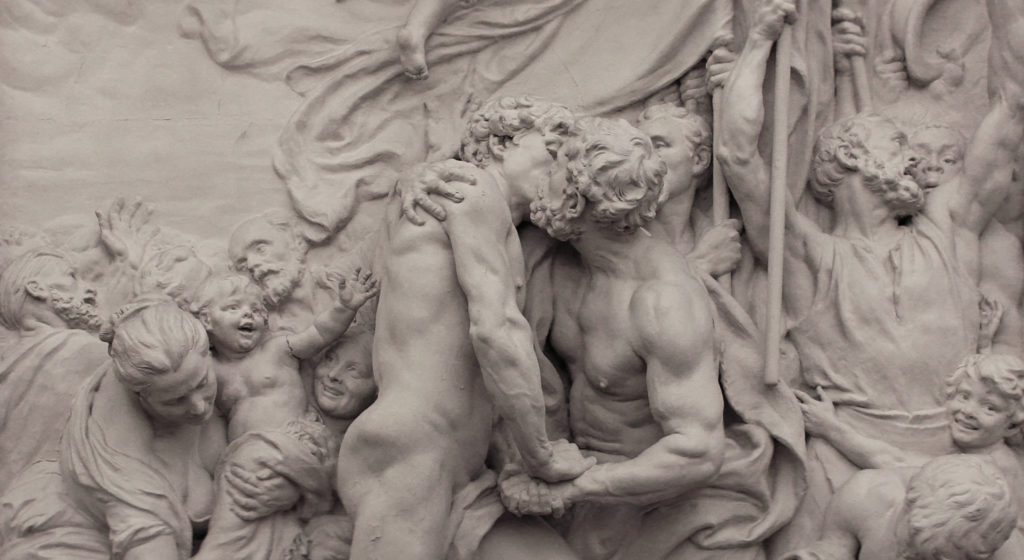
Aimé-Jules Dalou, Brotherhood (La fraternité), 1883, plaster. Paris, city hall of the Xth arrondissement. Credit: Wikimedia Commons / CC BY-SA 3.0 / photo by Coyau.

Conferentie Male Bonds in Nineteenth-Century Art

15-16 May 2018, Museum of Fine Arts, Ghent

Male Bonds is a two-day international conference organized by Ghent University and the European Society for Nineteenth-Century Art (ESNA); in cooperation with the University of Antwerp and the Museum of Fine Arts, Ghent; and with the support of the Research Foundation Flanders (FWO), of Radboud University’s Institute for Historical, Literary and Cultural Studies, of the Dutch Postgraduate School for Art History (OSK) and of the Netherlands Institute for Art History (RKD).

This conference will probe, challenge and expand upon the academic narrative of male homosociality through the lens of art history. It aims to establish an overview of a variety of male bonds that underpinned nineteenth-century art, and to consider the theoretical and methodological implications of the study thereof. In so doing, it seeks to build a bridge between traditional art-historical scholarship and the fields of gender and gay and lesbian studies: an interdisciplinary exchange of which the full potential for scholarship on the nineteenth century remains to be exploited.

For more information, see the conference website: http://www.malebonds.ugent.be/ or the event’s Facebook page: https://www.facebook.com/events/599483510426231/.

Rijksmuseum Fellowship Programme 2018-19

Applications due by 14 January 2018

We welcome international research proposals which open new perspectives on the Rijksmuseum’s collection, its history and activities. The purpose of the programme is to enable applicants to base part of their research at the Rijksmuseum and thus to strengthen the bonds between the museum and universities. The focus of research should relate to the Rijksmuseum’s collection and activities, and may encompass any of its varied holdings, including paintings, sculpture, decorative arts, prints, drawings, photography and historical artefacts. The programme offers students and academic scholars access to the museum’s collections, library, conservation laboratories and curatorial expertise.

Furthermore, the museum facilitates opportunities for Fellows to engage in workshops and excursions to encourage the exchange of knowledge – both amongst themselves and the broader museum audience.

Application and procedure

Please review the eligibility, funding and application requirements by visiting the Rijksmuseum website. For the 2018-2019 academic year, candidates can apply for:

  • Andrew W. Mellon Fellowship for art historical research –
    Apply here
  • Johan Huizinga Fellowship for historical research –
    Apply here
  • Migelien Gerritzen Fellowship for conservation research –
    Apply here
  • Dr. Anton C.R. Dreesmann Fellowship for art historical research –
    Apply here

The closing date for all applications is 14 January 2018, at 6:00 p.m. (Amsterdam time/CET). No applications will be accepted after this deadline. All applications must be submitted online and in English. Applications or related materials delivered via email, postal mail, or in person will not be accepted.
Selection will be made by an international committee in February 2018. The committee consists of eminent scholars in the relevant fields of study from European universities and institutions, and members of the curatorial and conservation staff of the Rijksmuseum. Applicants will be notified by 1 March 2018. All Fellowships will start in September 2018.

Further information and application forms: www.rijksmuseum.nl/fellowships
For questions concerning the application procedure, contact Marije Spek, Coordinator of the Fellowship Programme
(m.spek@rijksmuseum.nl), +31 (0)20-6747395.