Congres 2017: Mens en dier

Congres De Moderne Tijd 2017: ‘Mens en Dier’

Call for papers

Congres De Moderne Tijd 2017
Mens en dier. De omgang met dieren in de Lage Landen (1780-1940)

Amsterdam, 15 december 2017

In 1838 werd in Amsterdam de diergaarde Natura Artis Magistra (Artis) opgericht, een initiatief van burgers en wetenschappers. Dierentuinen waren op zich geen nieuw verschijnsel, zo was de menagerie van Willem III bij Voorburg vermaard, die aan het einde van de 18de eeuw materiaal bood voor de vogelstudies van kunstenaar Aart Schouman en de natuurwetenschapper Aarnout Vosmaer. Voor het grote publiek was er de menagerie van de Amsterdamse ‘Blaauw Jan van Aken’ (ca. 1750) of het rondtrekkende ‘beestenspel’ van Antoine Alpy, dat in 1808 door Lodewijk Napoleon werd opgekocht voor een eigen dierentuin. Deze kwam na omzwervingen – met wat er nog van de dieren over was – in de Hortus Botanicus van Amsterdam terecht. De schilders Pieter Gerardus van Os, Wouter van Troostwijk en Jean Bernard trokken enthousiast naar de hortus om voor het eerst leeuwen te zien en te tekenen.

Dieren vormden een bron van vermaak, van verwondering en materiaal voor de wetenschap. In dierentuinen betrof het vooral exotische dieren, maar de dagelijkse omgang met huisdieren en vee is niet minder interessant. Wanneer veranderde de waak- en jachthond in een trouwe viervoeter, de muizenjagende kat in een knuffeldier? Is er een relatie te leggen met de huiselijkheidscultuur van de 19de eeuw?

In 1877 werd de Nederlandse Vereniging tot bescherming van dieren opgericht. Vanaf toen kregen sommige bedreigde dieren wettelijk een beschermde status. Inmiddels hebben alle Nederlandse dieren zelfs een politieke partij die hun belangen behartigt. Hoe sterk was de stem van Belgische dieren? En bestaat er een relatie tussen de dierenbescherming en dierecologie en de in diezelfde tijd opkomende natuurbescherming?

Kortom, de interdisciplinaire werkgroep De Moderne Tijd (voorheen De Negentiende Eeuw) is op zoek naar verhalen over de veranderende omgang van mens en dier van ca. 1780 tot 1940.

Suggesties voor onderwerpen:

  • Presentatie en representatie: het verzamelen en tonen van levende en/of dode dieren
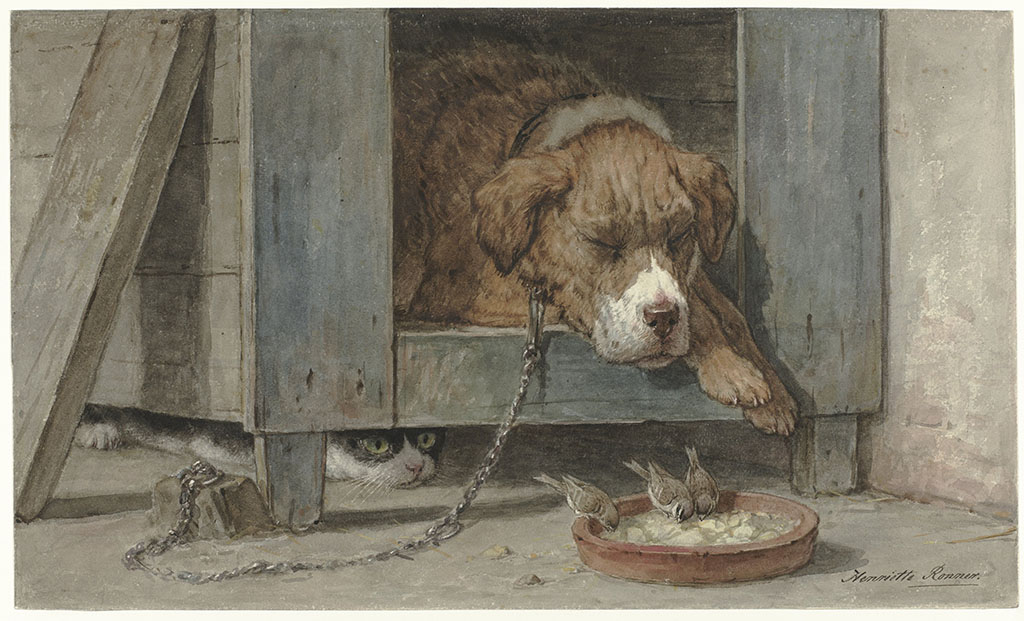
  • Hond en kat: de geboorte van het huisdier
  • Dieren verbeeld in de beeldende kunst en in de (wetenschappelijke) illustratie
  • Carnival des animaux: het dier in de muziek
  • Het dier als politiek symbool of metafoor
  • De ontwikkeling van de zoölogie
  • De ontdekking van een dierecologie
  • Dieren voor voedsel en gebruik
  • Het beschermde dier
  • Dieren en vermaak
  • De verbeelding van dieren in proza en poëzie

Wij nodigen sprekers uit voor een lezing van 20 minuten, te houden op ons congres van 15 december 2017 in Amsterdam.
Abstracts van max. 150 woorden kunnen worden ingeleverd tot 15 juni bij de secretaris van de werkgroep Matthijs Lok: M.M.Lok@uva.nl.
De indieners krijgen 1 augustus bericht van het bestuur van de werkgroep De Moderne Tijd.

ESNA: Food, glorious food

ESNA Conference 2017: Food, Glorious Food

Food, glorious food: food at the heart of nineteenth-century art

Antwerp, Museum Aan de Stroom (MAS), 8-9 June 2017

Organized by ESNA (European Society for Nineteenth-Century Art) and MAS Antwerp, in conjunction with the exhibition ‘Antwerp à la carte’.

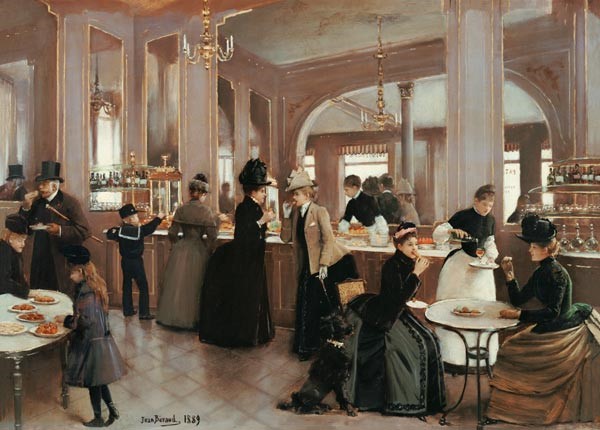
This year’s two-day international ESNA conference intends to study the various and complex relations between food, the experience of eating, and nineteenth-century art. Although food has always been a subject in the arts, the modes of production, distribution and consumption of nourishment changed radically during the course of the nineteenth century. Food decisively entered the public sphere and consciousness in cities where new sites of consumption in the form of mouth-watering food shops and restaurants emerged. At the same time food became a marker of national identity, of gender identity, of ‘taste’, of affluence, and of social and economic status.

Modern phenomena such as industrialization, liberalization of the market, urbanization, rise of the middle class, issues of nationality and gender, leisure time and economic upheaval affected the gastronomic field as well as the depiction of it in the visual arts. A new fascination for food emerged and was reflected in the entire panoply of the artistic field, ranging from recipes, food literature, decorative arts and interior design to works of art and art criticism.

See the conference website for more details.

Vacature UGent: ‘Dutch Political Songs’

De vakgroep Letterkunde van de Universiteit Gent heeft voor 48 maanden een voltijdse betrekking vacant voor een promovendus. De aanwerving vindt plaats in het kader van een vierjarig onderzoeksproject op het terrein van de historische letterkunde en muziekwetenschap, gefinancierd door het Bijzonder Onderzoekfonds (BOF) van de Universiteit Gent, met als titel: ‘Singing Communities: Dutch Political Songs and the Performance of National Identity (1775-1825)’.

De promovendus zal binnen dit project onderzoek doen naar de gemeenschapsvormende werking van het politieke lied in de Noordelijke Nederlanden omstreeks 1800. Het politieke lied werd in die periode een belangrijke functie toegedicht in het versterken van een nationale identiteit. Singing Communities onderzoekt die identiteit aan de hand van Nederlandse liederen uit de periode 1775-1825. Het richt zich met name op de mogelijke spanningen tussen het gewenste gemeenschapsvormende effect van de liederen op de zangers en de harde politieke realiteit van verdeeldheid en crisis. De volledige projectomschrijving is op te vragen bij Kornee van der Haven (Cornelis.vanderHaven@UGent.be).

Het bronnenmateriaal bestaat uit de liederen zelf, maar ook uit achtergrondmateriaal dat inzicht biedt in hoe het corpus gefunctioneerd heeft in een sociale context van bijvoorbeeld het gemeenschappelijk zingen van de liederen. Behalve de teksten van de liederen zal ook hun muziek bestudeerd worden. De promovendus moet daarom in staat zijn om een lied zowel tekstueel als muzikaal diepgaand te analyseren. Een achtergrond in de muziekwetenschap en/of de (Nederlandse) literatuurwetenschap is daarbij gewenst. Bij een muzikale achtergrond is een affiniteit met tekstanalyse een belangrijke voorwaarde, en omgekeerd vragen wij van een letterkundige kandidaat voldoende ervaring met en interesse voor de werking van muziek. De begeleiding van het project zal uitgevoerd worden door een promotor met een literatuurwetenschappelijke achtergrond (Kornee van der Haven, Universiteit Gent) en een promotor op het terrein van de muziekwetenschap (Isabella van Elferen, Kingston University London).

De kandidaturen, met motivatiebrief, een voorstel voor een ‘plan van aanpak’ en een Curriculum Vitae, dienen ten laatste op 15 mei ingediend te worden. Voor meer informatie, zie de vacaturepagina van de Universiteit Gent.

Conferentie Teylers Museum, 20-22 april

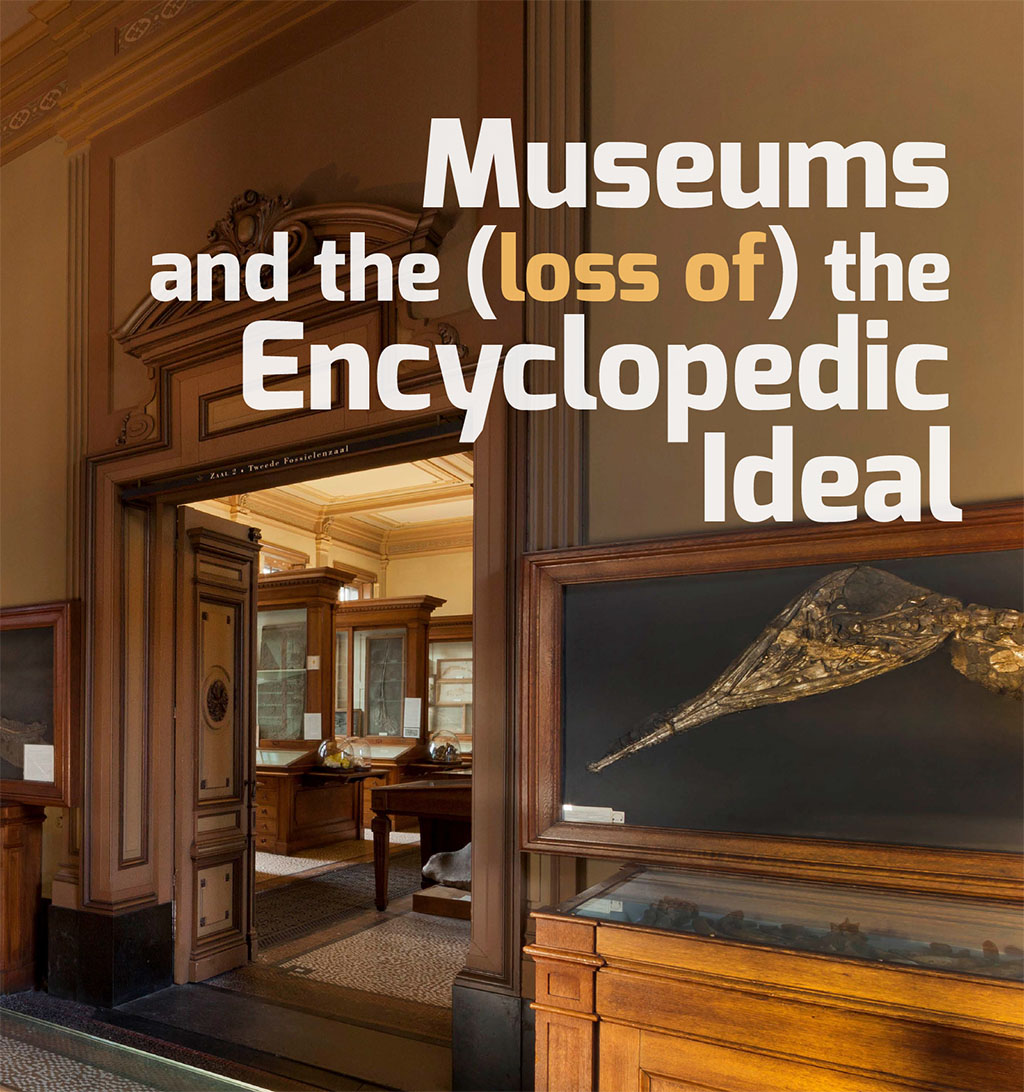
Museums and the (loss of) the encyclopedic ideal:
An international conference about art, science, religion, aesthetics and visual cultures in museums

On April 20, 21 and 22 of this year, Teyler’s Museum in Haarlem is hosting a two-day conference about museums and the loss of the encyclopedic ideal in the 19th and 20th centuries, taking its venue, a well-preserved 18th century museum as our point of reference.

About the conference

The conference will deal with the question of how the relationship between science and religion, between the visual cultures of art and science, and between religion, ethics and aesthetics has changed over the course of the 19th and 20th centuries, and how this affected each of these categories? How did such categories as ‘science’, ‘art’ and ‘the public’ emerge in this process? How did the universal scientist give way to the modern expert? How did research and pedagogy get disentangled?
What meanings were attached to the word ‘museum’ and how did these change over time? To what extent can we speak of the creation of clear
and meaningful boundaries in this process of differentiation and to what extent is the change merely cosmetic? And last but not least: do we witness a fading of such boundaries again today?

Conference fee

The regular fee for the conference is €50. Students can apply for a free ticket by sending an e-mail to Gerda Doorlag (gdoorlag@teylersmuseum.nl) with a copy of their student card.

Registration

You may register for the conference at http://bit.ly/Teylers2017 (short URL)

More information

Information and updates posted on the website of Teyler’s Museum: www.teylersmuseum.nl (short URL: http://bit.ly/Teylers2017).
You may address any questions to Ilja Nieuwland at Teyler’s Museum:
inieuwland@teylersmuseum.nl; tel. +31 623407807.

Sponsors

The conference ‘Museums and (the loss of) the encyclopedic ideal, 1785-2016’ takes place with the financial support of The Royal Netherlands Academy of Sciences, Teyler’s Museum, Teylers Stichting and the Louise Thijssen-Schoute Foundation.

De Negentiende Eeuw wordt De Moderne Tijd

Vanaf 2017 gaan de Werkgroep en het Tijdschrift ‘De Negentiende Eeuw’ verder in een nieuwe vorm en gericht op de bredere periode, onder de titel ‘De Moderne Tijd. De Lage Landen, 1780-1940’.

In de afgelopen jaren heeft De Negentiende Eeuw zich ontwikkeld tot een solide platform waarop het interdisciplinaire academisch onderzoek naar de Nederlandse en Belgische geschiedenis en cultuur in ruime zin (geschiedenis, beeldende kunst, architectuur, literatuur, muziek) zich heeft kunnen manifesteren.

Niettemin leefde er bij de redactie al langere tijd de wens om het tijdschrift nog aantrekkelijker te maken, zowel voor lezers als voor potentiële auteurs. Allereerst wilden wij de periode waarop het tijdschrift zich richt graag verruimen, zowel naar voren als naar achteren in de tijd – niet voor niets wordt er vaak gesproken van ‘de lange negentiende eeuw’. Door de scope te verbreden van het einde van de achttiende eeuw tot aan de Tweede Wereldoorlog, is het mogelijk langere lijnen in de geschiedenis te trekken en zo op een overtuigende wijze ontwikkeling en continuïteit te laten zien. Daarmee kan de relevantie van het verleden dat inmiddels zeker één of twee eeuwen achter ons ligt sterker in het licht gezet worden. Hierbij kwam dat er nog geen interdisciplinair tijdschrift bestond, gericht op de periode van het interbellum in de Lage Landen, terwijl er juist veel fascinerend onderzoek naar die periode wordt gedaan.

Ook bestonden er wensen van meer esthetische aard. Wij wilden onze lezers graag een tijdschrift aanbieden met een aantrekkelijker uiterlijk en vooral voorzien van afbeeldingen in kleur. Met name voor kunsthistorische bijdragen maakt kleur ons tijdschrift veel aantrekkelijker, zowel om het te lezen als om erin te publiceren.

Dit alles heeft geleid tot het besluit van het bestuur en de redactie om vanaf jaargang 2017 het tijdschrift in een nieuwe vorm aan te bieden, gericht op de bredere periode van 1780 tot 1940. In dat verband hebben het tijdschrift en de Werkgroep een andere naam gekregen, te weten: De Moderne Tijd. De Lage Landen, 1780-1940. De naam De Moderne Tijd is gekozen als tegenhanger van de voorafgaande historische periode, die doorgaans als de ‘vroegmoderne tijd’ wordt aangeduid. Onze leden ontvangen voortaan een nog levenskrachtiger tijdschrift waarin het onderzoek naar de kunst, cultuur en geschiedenis van de Lage Landen in de moderne tijd – waarvan de negentiende eeuw prominent deel uitmaakt – zich breed zal kunnen ontvouwen.

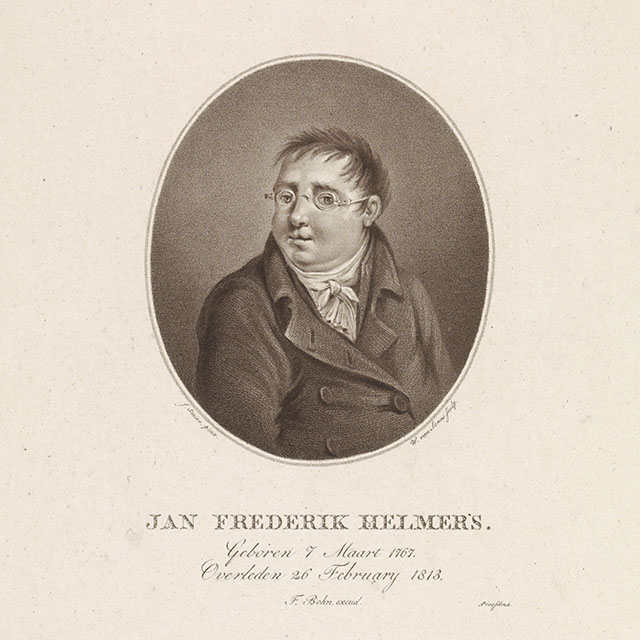
Jan Frederik Helmers. Prent Willem van Senus naar schilderij van Jacob Smies. Rijksmuseum Amsterdam, RP-P-1906-1086.

Jan Frederik Helmers 250 jaar!

Op 7 maart aanstaande zal in de Derde Helmersstraat het paneel van Jan Frederik Helmers worden onthuld.

Op dinsdag 7 maart 2017 is het 250 jaar geleden dat de Amsterdamse dichter Jan Frederik Helmers werd geboren. Drie Helmersstraten telt Amsterdam maar liefst en daarmee is hij de enige Nederlandse dichter die deze eer is gegund. Hij stond bekend als verzetsdichter, die het regime van Napoleon Bonaparte bekritiseerde.

De zichtbaarheid van Helmers, naast talloze andere personen, is nog verder toegenomen dankzij het door fotograaf Paul Fennis geïnitieerde project Geef Straten een Gezicht, waarbij panelen met het portret van de personen naar wie de straten zijn vernoemd aan de gevels komen te hangen. Inmiddels hangen er méér dan honderd van deze panelen in de stad.

De onthulling zal worden bijgewoond door de historisch letterkundige Lotte Jensen (Radboud Universiteit Nijmegen) en de neerlandicus Rinus van Hattum, die voor deze gelegenheid een bloemlezing uit Helmers’ werk samenstelden.

Meer informatie is te vinden op: www.facebook.com/geefstrateneengezicht en www.zaakhaes.nl.

Tentoonstelling J. W. Bilders in Kleef

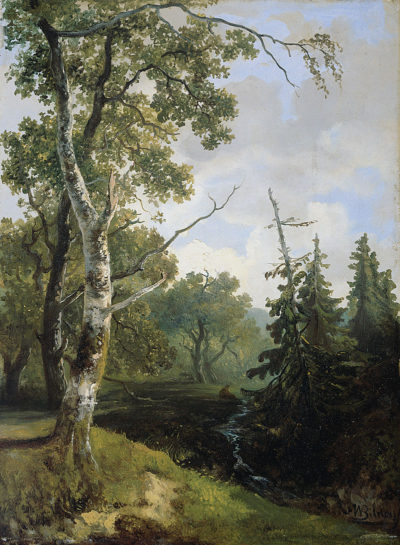
Johannes Warnardus Bilders: Bezield landschap

19 februari t/m 25 juni 2017 in het B.C. Koekkoek-Huis te Kleef.

De in Utrecht geboren Johannes Warnardus Bilders (Utrecht 1811-1890 Oosterbeek) geldt als voorloper van de zogenoemde Haagse School van het vroege Nederlandse impressionisme. In 70 schilderijen, tekeningen en grafiek zal het oeuvre van deze tijdgenoot van Koekkoek uit Nederland voor het eerst in Duitsland worden gepresenteerd.

Bilders kreeg zijn eerste tekenlessen aan de stedelijke Tekenschool en werd lid van de kunstvereniging „Kunstliefde“. Les in schilderen heeft hij nooit gehad, hij leerde het vak door zijn contacten met collega-schilders en het bestuderen van de toonaangevende kunstenaars van zijn tijd, zoals bijvoorbeeld B.C.Koekkoek. In 1839 ondernam hij een reisje naar Duitsland en ontdekte, samen met een bevriend kunstenaar, het rivierlandschap van Rijn en Ahr. Tot 1859 volgden er nog vele verdere studiereizen naar het buurland, aan de Rijn, naar Wiesbaden (waar hij koning Willem III bezocht) en naar het Zwarte Woud.

Vanuit Utrecht ging hij ook vaak naar Gelderland om er te werken, zoals in het jaar 1840 in de omgeving van Beek en 1841 voor het eerst naar Oosterbeek bij Arnhem. Hij was zo ingenomen van die plaats met zijn heidevelden en oeroude bomen, dat hij al in het daaropvolgende jaar besloot zich hier te vestigen. Hier werd hij na verloop van tijd tot een centrale vaderfiguur voor de jonge kunstenaars die eveneens naar Oosterbeek kwamen. In navolging van de Franse kolonie van kunstenaars die in de buitenlucht schilderden werd Oosterbeek later het „Nederlandse Barbizon“ genoemd. Het late werk van Bilders weerspiegelt iets van het voorbeeld van deze Franse schilderkunst, ook al is Bilders nooit in Frankrijk geweest. Met zijn zoon Gerard samen zonden zij hun werk in naar verschillende wereldtentoonstellingen.

1858 verhuisde Bilders met zijn familie naar Amsterdam. Daar werkte hij mee aan de totstandkoming van de Galerie in Arte et Amicitiae, de belangrijkste Nederlandse kunstvereniging. Uit zijn laatste jaren dateren tekeningen in groot formaat, gemaakt met houtskool of wit en zwart krijt. Na de dood van zijn eerste vrouw en van zijn zoon Gerard leerde Bilders 1880 de schilderes Maria van Bosse kennen, die al langer van hem les had gehad, en keerde in dat jaar terug naar Oosterbeek. Samen ontdekten ze nu de aangrenzende landschappen van de Achterhoek en van de provincies Drente en Groningen. Op 79-jarige leeftijd stierf Bilders in Oosterbeek aan een longontsteking.

Deze tentoonstelling werd mogelijk gemaakt door de samenwerking met het Museum Veluwezoom, Kasteel Doorwerth en het RKD (Nederlands Instituut voor Kunstgeschiedenis) in Den Haag. Er verschijnt een catalogus van Jeroen Kapelle en Manon van der Mullen met rijke illustraties en een samenvatting van de tekst in het Duits.

The Rijksmuseum Fellowship Programme

The Rijksmuseum operates a Fellowship Programme for outstanding candidates working on the art and history of the Low Countries whose principal concern is object-based research. The aim of the programme is to train a new generation of museum professionals: inquisitive object-based specialists who will further develop understanding of art and history for the future. The focus of research should relate to the Rijksmuseum’s collection, and may encompass any of its varied holdings, including Netherlandish paintings, sculpture, decorative arts, prints, drawings, photography and historical artefacts. The purpose of the programme is to enable applicants to base part of their research at the Rijksmuseum, to strengthen the bonds between the universities and the Rijksmuseum, and to encourage the understanding of Netherlandish art and history. The programme offers students and academic scholars access to the museum’s collections, library, conservation laboratories and curatorial expertise.

Eligibility

The Rijksmuseum Fellowship Programme provides opportunities for recent graduates (at the Master’s level), as well as doctoral and post-doctoral candidates. The programme is open to candidates of all nationalities and with varied specialisms. They may include art historians, curators, conservators, historians and scientists. Candidates should have proven research capabilities, academic credentials and excellent written and spoken knowledge of two languages (English and preferably Dutch or German). Fellowships will be awarded for a duration ranging from 6-24 months, starting in the academic year 2017-2018. Please review the Rijksmuseum website for detailed information on each individual Fellowship position.

Funding

Fellowship stipends are awarded to help support a Fellow’s study and research efforts during the tenure of their appointment. The stipend amount varies by funding source and Fellowship period. Visit the Rijksmuseum website for further information.

Application and procedure

Please review the eligibility, funding and application requirements by following the link to the Fellowship of your interest:

  • Andrew W. Mellon Fellowship for art historical research –
    Apply here
  • Johan Huizinga Fellowship for historical research –
    Apply here
  • Migelien Gerritzen Fellowship for conservation research – Apply here
  • Manfred & Hanna Heiting Fellowship for photo-historical research – Apply here

The closing date for all applications is 12 March 2017, at 6:00 p.m. (Amsterdam time/CET). No applications will be accepted after this deadline. All applications must be submitted online and in English. Applications or related materials delivered via email, postal mail, or in person will not be accepted.

Selection will be made by an international committee in April 2017. The committee consists of eminent scholars in the relevant fields of study from European universities and institutions, and members of the curatorial and conservation staff of the Rijksmuseum. Applicants will be notified by 1 May 2017. All Fellowships will start in September 2017.

Further information

For questions concerning the application procedure, contact Marije Spek, Coordinator of the Fellowship Programme (m.spek@rijksmuseum.nl), +31 (0)20-6747395.

Congres De Negentiende Eeuw 2016

Kiesrecht en Democratie

Op vrijdag 9 december 2016 houdt de Werkgroep De Negentiende Eeuw haar jaarlijkse congres, deze keer getiteld 'Kiesrecht en democratie'. Het congres vindt plaats in de Doelenzaal van de Universiteitsbibliotheek Amsterdam, Singel 425, Amsterdam.

Thema

12 december 2017 is het exact honderd jaar geleden dat de strijd om het algemeen kiesrecht werd beslecht. Op die dag in 1917 werd op het bordes van het oude stadhuis van Den Haag aan de Groenmarkt door de gemeentesecretaris het algemeen kiesrecht voor mannen en het passief kiesrecht voor vrouwen afgekondigd. Een achteraf gênante twee jaar later, volgde het algemeen kiesrecht voor vrouwen. In België werd in 1921 het algemeen kiesrecht voor mannen ingevoerd, pas in 1948 voor vrouwen.

Met de invoering van het algemeen kiesrecht voor mannen en vrouwen kwam er een einde aan een lange en gecompliceerde discussie over democratie en gelijke rechten, die gedurende de hele negentiende eeuw, niet alleen in de politiek, maar ook daarbuiten was gevoerd. In 1800 had het begrip ‘democratie’ nog allerlei negatieve gevoelens opgeroepen; revolutie, wanorde, geweld en willekeur. Maar een eeuw later, in 1900, had deze ‘associatie met de guillotine’ plaatsgemaakt voor een positieve waardering.

Dit proces was niet louter een kwestie van politieke emancipatie. Culturele, sociale en economische ontwikkelingen speelden eveneens een grote rol in de lange discussie over het algemeen kiesrecht en de uiteindelijke invoering ervan.


Programma

9:30-10:00
Inloop en koffie

10:00-10:15
Opening door dagvoorzitter Wessel Krul

10:15-11:15
Jeroen van Zanten: ‘Inleiding op het thema’
Ulla Jansz: ‘Vrouwenkiesrecht: een omstreden kwestie onder Nederlandse feministen, 1870-1900’

11:15-11:30
Koffiepauze

11:30-13:00
Elisabeth Leijnse: 'De meerderheid in getal is in den regel de minderheid in verstand': Cécile de Jong van Beek en Donk en het algemeen stemrecht’
Aukje van Hout, ‘Wat Geertje overkwam en wat Marijtje ervan docht. Literaire propaganda van de Vereeniging voor Vrouwenkiesrecht’
Adriejan van Veen, ‘“Geen gewigter oogenblik dan het tegenwoordige”. Het maatschappelijke debat over en de organisatie van de eerste rechtstreekse Tweede Kamerverkiezingen in 1848’

13:00-14:00
Lunch

14:00-14:15
Informatie over koerswijziging werkgroep en tijdschrift

14:15-14:30
Visueel Intermezzo Eveline Koolhaas-Grosfeld

14:30-16:00
Ido de Haan, ‘Ondemocratische verkiezingen’
Geerten Waling: ‘1848 als “moment van gekte”: democratische experimenten op het Europese continent’
Piet Veldeman, ‘Met stempotlood gewapend? Algemeen stemrecht avant la lettre bij de burgerwacht in België (1830-1914)’

16:00-16:15
Theepauze

16:15-16:45
Flip Kramer, 'Willem Treub en het fin de siècle in de electorale cultuur'

16:45-17:30
Afsluitende opmerkingen Remieg Aerts en slotdiscussie


Toegang en aanmelden

Kosten voor de dag: € 25 (studenten en promovendi € 15) inclusief lunch, ter plekke contant te betalen. Opgeven s.v.p. vóór 2 december 2016 bij de secretaris van de werkgroep, Matthijs Lok: m.m.lok@uva.nl.

De Moderne Tijd 4 (2020) 3-4: ‘Crisis en catastrofe. De omgang met rampen in Nederland in de lange 19de eeuw’

De Moderne Tijd 4 (2020) 3-4: ‘Crisis en catastrofe. De omgang met rampen in Nederland in de lange 19de eeuw’

Lotte JensenDe opmars van Disaster Studies. Nieuwe perspectieven in het rampenonderzoek 147-164
Ruben RosDe opkomst van de ‘nationale ramp’. Een begripsgeschiedenis 165-187
Abstract (EN)
The rise of the ‘national disaster’. A conceptual history.In the early nineteenth century the concept of ‘national disaster’ makes its appearance in Dutch periodicals, marking a rich variety of events, developments and ideas as disastrous for the wellbeing and integrity of the nation. This article shows how the concept of ‘national disaster’ is rooted in changes in the meaning and use of the concept of ‘disaster’. Guided by a computational analysis of Dutch newspaper discourse in the period between 1750 and 1850, the article demonstrates how the concept of ‘disaster’ was increasingly used in political discourse from the early nineteenth century onwards. The politicization of the concept of disaster, and its application to ideas about the public sphere and national territory led to the emergence of the ‘national disaster’.
Erica BoersmaBovenregionale solidariteit bij stads- en dorpsrampen in de achttiende-eeuwse Republiek der Verenigde Nederlanden. Het noodhulpbeleid van de hogere overheden 187-206
Abstract (EN)
Super-regional solidarity in city and village disasters in the eighteenth-century Dutch Republic.The historiography of disasters is quite unanimous that the higher authorities in the Dutch Republic had little interest in alleviating local distress. The explanation for this lack of supra-regional solidarity is usually found in the institutional inability of the administratively fragmented Dutch Republic: only after the emergence of a central (nation)state in 1795 did disaster relief become modernized. Most disaster research concerned floods; this article examines city and village disasters. Analysing the policies of the higher authorities on the structural aid to victims, it will show that supra-regional solidarity and aid was not only possible but also frequent in the Dutch Republic. Based on urban disaster policies, this article will suggest some alternative explanations for the lack of supra-regional support in flood disasters.
Arti PonsenHuiselijke relieken. De Leidse buskruitramp (1807) in openbare en particuliere collecties 207-233
Abstract (EN)
Homely relics. The Leiden gunpowder disaster (1807) in public and private collections.On January 12, 1807 part of Leiden’s inner city was devastated by the explosion of an inland boat loaded with gunpowder. About 160 people – mostly women and children – were killed, some 2000 injured. Survivors kept mementoes of their loved ones and of the event itself. Over time, many of these ‘secular relics’ were acquired by museums, others are still with the heirs of their original owners. The article discusses how the Dutch word ‘relic’ lost its religious connotation and how the private provenance of objects relating to the gunpowder disaster differs from the public veneration for national relics of Dutch history and art. The term ‘homely relics’ is proposed as a new subcategory of the ‘secular relics’ defined by Wim Vroom in 1997.
Marita MathijsenTen voordeele van …. Liefdadigheidsuitgaven in de negentiende eeuw 234-258
Abstract (EN)
In favor of…. Charity publications in the nineteenth century.In Dutch history, charity publications were almost entirely a 19th century phenomenon. In this article I provide an overview of this phenomenon. The first publication that I have been able to trace is from 1784, the most recent one from 1930. However there are some predecessors of charity publications. The few studies that have been published about charity literature emphasize their national message. Occasions for charity publications were many and varied. Even so, flood disasters prevail. The most varied genres could be employed for the purpose: theater plays, poetry, sermons, essays, etc. However, poems are in the majority, and it is they in the first place that become the object of criticism. From midcentury onward critical comments become ever fiercer, in particular concerning their quantity and their countless platitudes. What makes the phenomenon typically nineteenth century is the shared mentality behind it. To help out in the case of disasters or poverty was not yet a public matter but rested with privately undertaken initiatives.
Jan Wim BuismanOnweer. Een ramp, een straf of een subliem schouwspel? 259-269
Abstract (EN)
Thunderstorms. A disaster, a dvine punishment, or a sublime spectacle?.Thunderstorms often had disastrous consequences in former times, especially when gun powder magazines were struck. After the invention and implementation of Franklin’s lightning rod, the interpretation of these disasters as divine punishments seemed less obvious. Technology and science changed relations between the concepts of God, nature, and man. Very generally speaking, a religion of fear gave way to a religion of love. Nature was considered less a menace than a friend, a shift subtly foreshadowing the Romantic period. Put in more safe life conditions, man tended to hold more optimistic views of himself and dared to play artistically even with dangerous, sublime subjects such as thunderstorms.
Lotte JensenLiederen als nieuwsbrenger en troostverschaffer. Branden, scheepsrampen en grote internationale catastrofes, 1755-1918 270-293
Abstract (EN)
Singing about fires, shipwrecks and major international catastrophes between 1755 and 1918. Local, national and international solidarity.This article focuses on Dutch songs about three different kind of disasters in the period 1755-1918: fires (which occurred in Dutch villages and cities), ship wrecks (both in the Netherlands and abroad) and other foreign catastrophes, such as the earthquake on Martinique (1839) or the floods in Mexico (1888). This popular genre is an important source to understand how people coped with disasters in the past. They were not only used to spread the news, but also to make sense of the events by offering moral and religious lessons. This article investigates how these different types of disaster songs could shape a shared sense of community on the local, national and international level. While songs about fires were often directed at the local community, ballads about shipwrecks appealed to the imagined Dutch community. Songs about big disasters in foreign places, sometimes aimed at raising international solidarity, but they were more often used to strengthen communal feelings at the national level.
Fons MeijerVorst in het vizier. Nationalisme en de verbeelding van de Oranjes na rampen in de negentiende eeuw 294-320
Abstract (EN)
Looking at the monarch. Nationalism and the representation of Orange monarchs after disasters in the nineteenth century.The nineteenth-century Dutch monarchs from the House of Orange often played a proactive role in the aftermath of major catastrophes, such as storm surges, river floods and destructive explosions. Authors repeatedly praised their commitment afterwards and characterised them as symbols of the nation. In this article I demonstrate that the discourse through which monarchs were celebrated should quintessentially be understood as manifestations of nationalism, that is: these discourses cultivated a national sense of unity and thus popularised a the notion of the Netherlands as a national community. As it turns out, authors commonly cultivated a conservative notion of national community, concentrated around conformist concepts such as unity, hierarchy and moderation.
Ron BrandEmpathie of sensatiezucht? De scheepsramp van de ‘Berlin’ in 1907 en de nasleep ervan 321-336
Abstract (EN)
Empathy or sensationalism? The shipping disaster of the ‘Berlin’ in 1907 and its aftermath.In the early morning of February 21, 1907, during a fierce storm, the ferry ‘Berlin’ crashed on the pier of Hook van Holland. With 128 victims, it still is the largest maritime disaster off the Dutch coast in peacetime. Due to the enormous interest of the population, the media and the Dutch royal house, it became a major media disaster in Dutch history. How did that happen? The disaster occurred at a time when a new era was dawning by the dissemination of many new forms of media, such as film, photography and illustrated magazines. In addition, there was the special attention paid by Prince Hendrik, Queen Wilhelmina’s husband. His arrival in Hook van Holland was unprecedented, because he not only came to watch the rescue attempts, but also actively contributed to it. That made the disaster one with two faces; on the one hand, that of the lower class with the population of Hook of Holland and the brave saviors and, on the other hand, one of the upper class because of the attention paid to Prince Hendrik. All this ensured that the disaster was experienced intensely, more intensely than before.
Hans BeelenBezet door het ijs. De literaire verwerking van onfortuinlijke reizen ter walvisvangst in het rampjaar 1777/78 337-357
Abstract (EN)
Beset by ice. The Dutch literary resonance of unfortunate whaling voyages in the catastrophic year 1777/78.The Greenland whaling catastrophe of the year 1777 resulted in seventeen voyage descriptions, written in five languages over a period of 40 years. Travelogues in Dutch, German and Danish reflect the international character of the eighteenth-century whaling trade. As for the Dutch literary setting, there appear to be great differences in style and processing between printed journals written by surviving seamen and descriptions written by or in collaboration with more or less professional authors.
Alicia Schrikker en Sander TetterooDe koloniale ruimte herbezien. De politiek-culturele beleving van Indonesische natuurrampen in de 19e en vroege 20e eeuw oplossen 358-381
Abstract (EN)
The colonial space revisited. The cultural and political experience of Indonesian natural disasters in the nineteenth and early twentieth century.This contribution analyses the colonial space that encompassed The Netherlands and Indonesia through the lens of historical disasters. In the past as much as in the present, Indonesia’s geophysical circumstances made the region vulnerable to volcanic eruptions, earthquakes and tsunami’s. During the nineteenth and early twentieth century such disasters confronted its victims, the other inhabitants of the archipelago and Dutch authorities with considerable challenges. Organizing relief and reconstructing the affected places and societies, prompted societal and governmental responses in colonial Indonesia as well as in The Netherlands. This article centres around two case studies: the eruption of Mount Awu on Sangihe Besar in 1856, and the earthquake that struck West Sumatra in 1926. We show that cultural and political interpretations of these disasters varied considerably between Dutch and Indonesian actors. By building on new insights from the fields of New Imperial History and Disaster Studies, we understand these divergences as the results of the differences in interests, worldviews and political realities faced by those who engaged with disasters in the Netherlands East Indies. On the one hand, Dutch actors tended to frame disasters as joint experiences that bound together motherland and its colony through charity and aid in a single humanitarian space. Yet their decidedly colonial lens led the Dutch to view disasters mainly through their own interests in the archipelago, thereby obscuring the multi-layered nature of local disaster responses. We therefore foreground local disaster responses to expose the limits of colonial disaster interpretations and thereby emphasise the fragmented nature of the colonial space.
Judith Bosnak en Rick Honings‘Behoed ons arme volk voor de vulkaan-poëten’. De literaire verwerking van de Krakatau-ramp van 1883 in Nederland en Indonesië 382
Abstract (EN)
‘Save our poor people from the vulcano poets’. The literary reception of the Krakatoa disaster of 1883 in the Netherlands and Indonesia.On August 27, 1883, the volcano Krakatau in the Dutch East Indies erupted and collapsed, causing the deaths of tens of thousands, mainly as a result of devastating tsunamis. The Krakatau eruption was one of the first disasters to take place beyond the Dutch boundaries that received so much attention in the Netherlands. Because the Indies were a Dutch colony, a response of the motherland was rather logical. In many places, charity activities were organized to raise money for the victims. This article focuses on the Dutch and Indonesian literary reactions on the Krakatau disaster. For this purpose, two scholars work together: one specialized in Dutch Literary Studies and the other one in Indonesian Languages and Cultures. In the first part of the article several Dutch charity publications are analysed; the second part focuses on Indonesian sources (in Javanese and Malay). How and to what extend did the reactions in the Netherlands and Indonesia differ?